Our Blog
Chimney Safety Tips From the CSIA
No matter the condition of your fireplace, wood stove, or other chimney-connected appliance, if you don’t understand how your system works, it will be difficult getting it to perform in a way that optimizes both performance and safety.
When trying to light a fire it’s important to remember that your entire house works as a system.
For example, you could have a sparkling new home with a fireplace you could eat out of, but if you don’t understand some basic concepts of thermal dynamics, your first fire could send smoke spilling out into your living room and not up your chimney as intended.
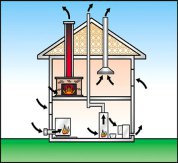
No matter the condition of your fireplace, wood stove, or other chimney-connected appliance, if you don’t understand how your system works, it will be difficult getting it to perform in a way that optimizes both performance and safety.
When trying to light a fire it’s important to remember that your entire house works as a system.
For example, you could have a sparkling new home with a fireplace you could eat out of, but if you don’t understand some basic concepts of thermal dynamics, your first fire could send smoke spilling out into your living room and not up your chimney as intended.
From a young age we are taught that “warm air rises”, so, why then would a fire in a firebox not naturally send smoke straight up the chimney? There could be a number of reasons for this, but here are three common issues with simple solutions:
- The damper is closed.
- Sufficient draft has not been established — basically, what this means is that the air inside the flue is too cold and heavy for the smoke to push up and out of the chimney. This is a pretty easy fix: grab some newspaper and twist it into a torch, light one end and hold it up as high as you can reach inside the fireplace. You will know that sufficient draft has been established once you see the smoke and flame being pulled up towards the chimney. Once that happens, go ahead and light your fire.
- There is too much negative pressure in the house. Are you running a whole-house fan or an exhaust fan in the kitchen or bathroom? Either of these appliances can make establishing an effective draft difficult, especially if your home is relatively new (newer homes tend to be more tightly sealed than older homes).
Don’t risk a fire or carbon monoxide poisoning call the experts US Chimney or visit our website at uschimney.com for an inspection of your chimney system or a new stainless steel chimney liner to ensure that your chimney system is clean and safe.